

Youth Power Comes Before Sexual-Health Information
Youth sexual-health campaigns gain traction when young people hold visible power over the message, the messenger, and the action being requested. Supplying another set of health facts rarely resolves the deeper problem.
Tobacco prevention and condom-access advocacy face a similar communication barrier. Accurate information can lose its force when adults control the language, stigma surrounds the subject, or the audience expects moral judgment. Embarrassment and distrust then shape behavior more strongly than the campaign leaflet does.
The useful question comes before drafting: Who has authority? Map that authority across three decisions. Identify who sets the message, who delivers it, and what action the audience is invited to take. Young participants should be able to approve wording, choose plausible channels, and challenge whether an advertised service can actually be used.
Agency as a Campaign Method
The Truth Initiative offers a practical case study because it framed youth audiences as participants in public action. Young people appeared as message authors and credible messengers rather than a demographic to be warned from a distance.
That distribution of power matters for condom access. A young adviser who can remove a humiliating phrase has a different role from a focus-group participant whose comments disappear into staff notes. Editorial authority changes both the message and the institution producing it.
Why the Truth Initiative Needed More Than a Health Warning
A conventional warning could easily sound like one more adult institution issuing behavioral instructions. The strategic challenge therefore extended beyond knowledge of health risks. Identity, messenger credibility, social pressure, and the environment surrounding a decision all required attention.
The Truth Initiative's official history describes a purpose centered on building a culture in which young people reject tobacco and participate in change. Its account provides a sound basis for understanding the campaign's stated purpose and evolution. It does not supply grounds for inferring unnamed funders, partners, or numerical outcomes.

Trust Questions Belong in Formative Research
Knowledge questions alone will miss the conditions that determine whether a message can be acted upon. Formative conversations should also ask whom young people trust, whether seeking help feels private, which words create embarrassment, how family members may respond, and whether religious language invites engagement or closes it down.
These questions reveal why repeating familiar risk statements has limited value. A person may understand a health fact and still avoid a clinic because the entrance is visible from school, the confidentiality policy is unclear, or the campaign copy sounds punitive.
Youth Authorship Changes Who Holds the Microphone
Youth authorship works through a clear sequence. Young advisers identify wording that sounds evasive, punitive, or scripted by adults. Staff review the proposed language for medical accuracy and safeguarding concerns. Young participants then select channels and participation prompts that make sense among their peers.
Three Decisions Young Advisers Must Shape
- Issue framing: involve advisers before anyone settles on the problem statement or drafts a slogan.
- Message review: conduct a line-by-line discussion of tone, clarity, stigma, and missing information.
- Prelaunch approval: let young participants assess the channels, resources, and calls to action before publication.
Recruitment should extend across schools, clinics, parish youth networks, community groups, and services used by young people outside formal education. A single route tends to reproduce the assumptions of the institution doing the recruiting. Compensated roles and written editorial rights make the arrangement concrete.
Staff should return decisions to the advisory group within somewhere around 7 to 10 business days. That deadline prevents consultation from becoming an open-ended request for unpaid feedback and gives advisers a chance to question the final choice.
The Microphone-Resource Split
Young people can control wording and channel fit while clinical reviewers verify health claims. Staff carry a third responsibility: proving that the promoted condom supply point, clinic, or confidential service is reachable. Each party holds meaningful authority within a defined area.
This arrangement narrows the distance between a public-health institution and an audience accustomed to being lectured. It also gives young messengers something defensible to share: accurate language, a credible action, and a resource that has survived an access check.
Move the Message From Personal Shame to Informed Agency
Shame-heavy campaigns isolate the individual from the pressures surrounding a health choice. A stronger message identifies those pressures directly and gives the reader a practical route forward.
The transferable architecture has four moves:
- Name the pressure or obstacle.
- Provide one verifiable fact.
- Affirm the young person's capacity to decide and ask questions.
- Offer an immediate, feasible action.
What the Four Moves Sound Like
Worried someone will see you asking? This service explains its confidentiality practice before you share personal information. Review the location and opening hours, then contact the service with your privacy question.
The sequence acknowledges fear without amplifying it. It gives a checkable statement, preserves the reader's agency, and ends with a modest action that can be completed now.
Correct-use education needs the same discipline. Pair concise instructions with the product leaflet or a clinically reviewed demonstration resource. Slogans cannot carry details about storage, opening a package, application, removal, or disposal.
Every linked service should be checked within approximately five business days of publication for location, eligibility, cost, confidentiality language, and current opening hours. A campaign breaks trust when its compassionate wording leads to an expired page or a service the intended reader cannot enter.
Respectful Language in Faith Settings
A conversation in a Catholic setting may need to acknowledge doctrinal concerns, public-health needs, and the dignity of people seeking protection. Audiences may also encounter advocacy voices such as Catholics for Choice or Frances Kissling, CFFC president, within the wider debate. A campaign should still explain its own purpose and evidence rather than assume those references settle the moral question.
The tobacco-to-condom boundary must remain explicit: transfer youth agency and public accountability, while avoiding an analogy that casts condoms, Catholic institutions, clergy, or doctrine as tobacco products or commercial actors. The subjects carry distinct medical and moral meanings.
Measure the Route From Attention to Condom Access
The relevant change in the Truth Initiative model is qualitative: youth identity, participation, and public accountability became central to campaign strategy. The supplied case material contains no sourced outcome figures, so numerical claims about campaign effects would outrun the evidence.
Condom-access evaluation works better as a ladder than as a popularity score. Each rung answers a different question, and the measures should be selected before launch.
A Practical Measurement Ladder
- Distribution: reach, views, shares, and delivery across intended channels.
- Attention: aided message recall after exposure.
- Understanding: comprehension of the health fact, resource, and requested action.
- Relevance: whether the wording reflects the audience's actual access concerns.
- Confidence: readiness to seek condoms, ask a privacy question, or contact a service.
- Referral behavior: resource-page visits and completed referral steps.
- Service contact: privacy-safe uptake patterns where appropriate data already exist.
On an approximate schedule, review reach, resource-page visits, and broken-link reports during the first seven days. Assess aided recall, comprehension, perceived relevance, and confidence after 30 to 45 days. Where privacy-safe referral information exists, examine completion and service-uptake patterns after 60 to 90 days.
Likes, views, and shares describe distribution. On their own, they cannot establish changes in condom use, HIV transmission, or reproductive-health outcomes.
Keep Every Number Auditable
Each reported figure needs its source, collection period, population, geographic scope, denominator, and metric definition. Communication staff and service providers should also agree which system owns each measure and how referrals will be recognized without exposing individuals.
Small cells require particular care. Combine or suppress subgroup reporting when a table could reveal sexual behavior, service use, or religious identity. Privacy protection belongs inside the evaluation design rather than at the end of the reporting process.
Translate Youth Agency Into Catholic Condom-Access Work
Adaptation begins with listening sessions held separately for young service users, health workers, educators, and faith participants. Sessions in the range of 60 to 90 minutes give each group room to surface practical barriers, medical needs, doctrinal concerns, and words experienced as shaming or evasive. Asking one mixed room to resolve every tension usually concentrates authority among the most comfortable speakers.
A Side-by-Side Translation
- Youth authorship becomes a compensated advisory group with documented editorial authority.
- Public reframing becomes language that resists stigma and names structural access barriers.
- Mobilization becomes a clear route to condoms, confidential services, education, or policy participation.
- Institutional accountability becomes verification that the promised route works in practice.
Staff can turn the listening findings into separate drafts for schools, clinics, parishes, social platforms, educator materials, and policy briefings. Every version should pass the same three gates: medical accuracy, respect for the intended community, and a feasible next action.
Maintain a review record with four fields: disputed phrase, youth rationale, clinical or pastoral review, and final decision. This record makes disagreement visible and prevents staff from quietly restoring language that advisers already identified as harmful.
Rewrite Fear Into a Usable Action
A practical rewrite replaces a fear-heavy claim with one verified fact, one agency statement, one confidential resource, and one feasible action. Test the result in every channel. A parish handout and a clinic post may use different phrasing, yet both should lead to an accurate and reachable service.
Put Youth Editorial Power Into the Next Launch
The final planning meeting should convert broad support for youth leadership into named responsibilities. Assign one owner for health verification, one for youth editorial decisions, one for safeguarding, and one for resource maintenance.
Youth-Led Condom-Access Launch Check
- Define the specific access problem instead of treating awareness as the objective.
- Recruit young advisers through multiple community, faith, education, and service routes.
- Pay advisers and record their editorial decision rights.
- Verify every medical claim and clinically review correct-use material.
- Test each draft for stigma, evasive wording, and avoidable moral pressure.
- Connect every message to a real supply point, service, educational resource, or participation route.
- Choose communication and service measures before launch.
- Complete a live access check an estimated 24 to 72 hours before release, covering telephone, web, transport, eligibility, cost, and opening hours.
- Create a correction route through which youth advisers and service users can flag inaccurate or stigmatizing content.
Borrow the Truth Initiative's distribution of voice and agency. Copying its language or presuming that its outcomes transfer would weaken the adaptation. Condom access needs its own medical facts, moral vocabulary, service map, and measures.
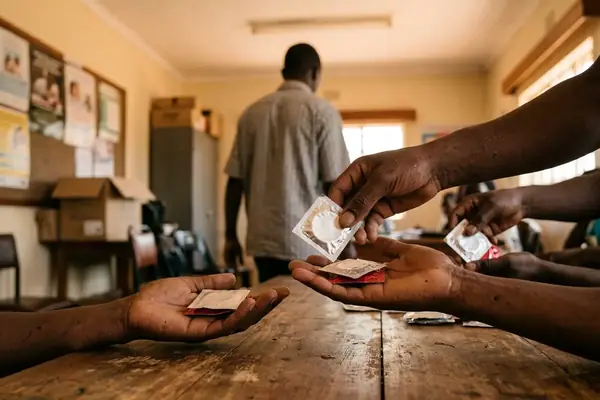
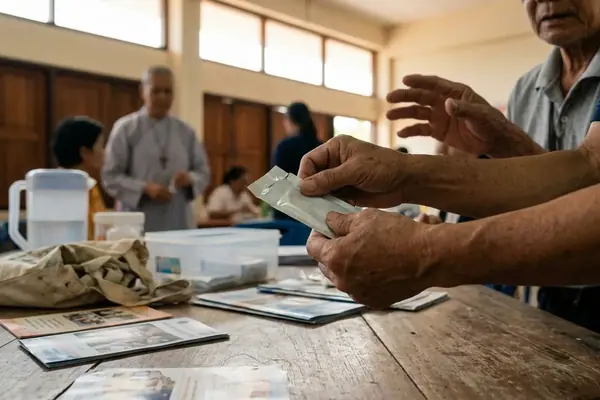
At a community health workshop, a young facilitator slides a judgmental draft to the edge of the table. She reads a peer's clearer condom-access wording aloud, points to the confidential-service line, and asks the room one final question: “Can someone actually reach this resource this afternoon?”









Share Your Opinion