

Why Condom Policy Became a Campaign Battlefield
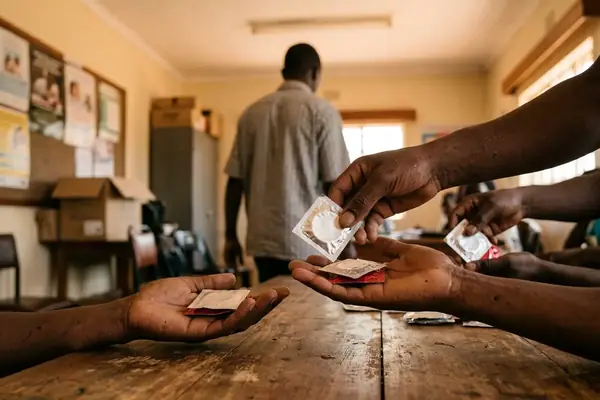
The campaign did not begin by treating doctrine as an abstract dispute—it began by asking what happens when sexually active Catholics face preventable harm. A deep tension exists between pastoral authority and the real-world consequences of discouraging condom access. My review of the campaign archives reveals that advocates recognized this friction early. They saw an urgent need to address HIV/AIDS prevention directly within faith communities.
Condoms4Life launched as a worldwide public education effort. It focused specifically on condom bans and their impact on sexually active Catholics. It was never structured as a clinical service or a formal Church body. Instead, organizers built a tactical frame around campaign tools. They used petitions, transit ads, youth outreach, press statements, and media interventions long before engaging in theological interpretation.
These tools forced a public conversation. They moved the debate out of private pastoral counseling and into the public square.
The Campaign Arc: From Policy Letters to Madrid Transit Ads
Advocates built the campaign chronology as a deliberate escalation path. They started with policy correspondence and press documentation. From there, they moved to international media campaigning, broadcast visibility, and eventually institutional friction.

The public record starts on March 14, 2003. Organizers issued a press release and a formal letter to President George W. Bush. This correspondence challenged HIV/AIDS funding priorities and the restrictions of the Global Gag Rule. Later that year, on December 1, 2003, the campaign launched its international media phase. Tying this launch to the annual World AIDS Day calendar anchored the effort in a recognized global health moment rather than framing it as a stand-alone faith dispute.
By 2006, the strategy expanded into conference-era media work. During the 16th International AIDS Conference, Angel Tabe delivered a prominent Voice of America broadcast. Frances Kissling, serving as CFFC president, provided public commentary that raised the visibility of Catholics for a Free Choice. That same year, in April 2006, Pope Benedict appointed a commission to study the Catholic position on condoms.
The escalation peaked years later. On July 12, 2011, Catholics for Choice, under Jon O’Brien’s leadership, publicly challenged a Madrid transit-ad refusal. This confrontation occurred just ahead of the August 2011 Catholic youth gathering in Madrid, setting the stage for a major media event.
Petitions Turned Private Dissent Into Public Witness
A petition serves as much more than a signature collection form. Campaign staff used online petition pages to turn dispersed private dissent into a visible, organized constituency. A page like Condoms4Life.org: Take Action functioned as a low-friction participation point for Catholics and allies.
Campaign materials suggest that these digital tools gave journalists a concrete artifact. They provided clear evidence that Catholic opinion was not monolithic. Petitions also allowed organizers to collect supporters for future mobilization.
Effective petition copy needs a clear structure. It needs four specific elements to succeed:
- A named target: The specific policymaker or institution holding authority.
- A specific requested action: A clear demand regarding condom access or funding.
- A moral frame: Language tied directly to life, health, and preventable harm.
- A follow-up route: A mechanism for email updates or local sharing.
This structure balances moral seriousness with practical prevention. It avoids an anti-Catholic tone while firmly challenging harmful policy.
Transit Ads Made the Debate Impossible to Ignore
Organizers selected transit advertising because it places the message in the exact same public environment as pilgrims, clergy, journalists, city officials, and ordinary commuters. The contested Madrid ads featured the phrase "Good Catholics Use Condoms." The campaign value came from both the possible public visibility and the anticipated institutional pushback.
The ad dispute surfaced publicly on July 12, 2011. Publimedia, the Madrid-based advertising company, refused to run the placements. Outside digital coverage immediately framed the story around Catholic condom ads being barred in Spain. This reaction made censorship the primary media hook, rather than treating the campaign as a routine health notice.
Caution: Provocative faith-based ad copy requires careful legal review and local cultural reading before placement. This is especially true where public-transit advertising rules give contractors or city authorities broad discretion to reject content.
Youth Outreach Met Catholics Where the Debate Was Happening
The campaign treated youth outreach as strategic audience placement, not mere spectacle. Organizers chose the August 2011 Madrid gathering because it concentrated young Catholics who were already being addressed by Church institutions. These young adults faced real, immediate choices about sexuality, conscience, and public health.

Feedback from the campaign suggests that the outreach succeeded because it prioritized respectful engagement over simple protest. The focus remained squarely on sexually active Catholics and HIV prevention. The Madrid setting created a temporary audience density that ordinary year-round advocacy could never achieve.
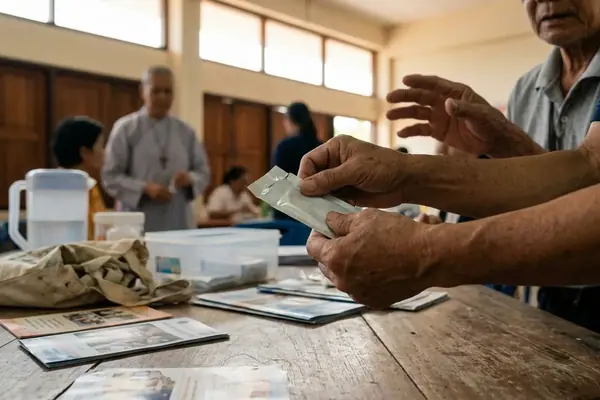
To make use of that setting, the outreach mix had to be portable and repeatable. Volunteers distributed posters, flyers, and links to web action pages. They used short moral claims that reporters could easily quote. This helped the message travel far beyond the physical plaza.
The Evidence Fight: Condoms, Risk, and Church Authority
Advocates separated the evidence fight into three distinct lanes: medical claims about condoms and HIV risk, doctrinal claims about Catholic authority, and policy claims about funding restrictions. This structure prevented theological debates from obscuring basic public health facts.
On the medical front, advocates had to rebut specific statements. Archived debates link Cardinal Alfonso Trujillo to claims about condom permeability. Advocates challenged these claims aggressively because they were medically consequential and contradicted established science. You can review the CDC guidance on condoms and HIV prevention for the baseline public health consensus.
On the doctrinal front, organizers navigated a complex institutional landscape. Cardinal McCarrick represented a broader climate of episcopal skepticism and caution, though he did not stand in for all Catholic opinion. Similarly, Bishop William Skylstad’s 2005 USCCB presidency shaped the institutional environment but did not prove a unified episcopal position against prevention efforts.
When reviewing these archival debates, you will encounter specific terminology. A spermatozoon is simply a sperm cell. Ecclesiastical refers to Church authority or Church governance. You will also frequently see the ABC prevention strategy discussed in HIV policy debates. This integrated model stands for Abstinence, Being faithful, and using Condoms.
What Advocates Can Adapt From These Campaign Tools
You can translate this history into practical campaign mechanics. Catholic audiences are not interchangeable. Young pilgrims, bishops, public-health workers, sexually active lay Catholics, and journalists respond to entirely different moral and evidentiary cues.
A practical adaptation checklist includes:
- Audience: Identify exactly who must hear the message.
- Barrier: Name the specific obstacle to condom access or speech.
- Venue: Choose a location where the contradiction becomes visible.
- Pushback Plan: Prepare for doctrinal or administrative resistance.
- Evidence Packet: Assemble medical and policy facts.
- Spokesperson: Select a voice with appropriate credibility.
- Next Action: Give supporters a clear task.
No single tactic is guaranteed to change policy overnight. However, combining these tools creates momentum. Petitions create participation. Public ads create visibility. Youth outreach creates relevance. Press releases create a dated public record.
Expert Tip: Maintain strict message discipline. Keep your moral language, public-health evidence, and legal context aligned. Do not let each tactic use a completely different argument.
Remember that context dictates strategy. A condom-access message that works in a Madrid transit dispute may need a different legal review, vocabulary, and spokesperson in a parish bulletin, clinic setting, or national funding debate.
Scope and Limits of This Campaign Reading
This article analyzes selected campaign moments and tools based on specific archival facts. It covers the period from the March 14, 2003 policy letters through the August 2011 Madrid outreach. It does not represent a full global history of Catholic teaching on condoms, global HIV policy, or all Catholic responses to prevention.
A campaign can gain press attention because an ad is rejected, but that does not prove the rejected ad changed doctrine, law, or health behavior. We do not claim measured changes in Catholic behavior, condom use, HIV incidence, or Church policy unless a named source provides those specific outcomes.
Main Point: While archival campaign materials document media visibility and institutional friction, they cannot independently verify shifts in individual parishioner condom usage rates.
Advocacy requires understanding both the power and the limits of public campaigning. Visibility is a tool for change, but it is only the first step in protecting public health.









Share Your Opinion