

Why Catholic Context Changes HIV Prevention Messaging
Public health communication faces a unique hurdle in faith-based settings. A sentence about HIV prevention that is medically correct can still fail entirely if it sounds like it is mocking conscience. I see this happen frequently when campaigns ignore Catholic identity, parish culture, or pastoral authority. The community need is clear: people require accurate health information to protect themselves and others. Yet, when the program response bypasses the moral vocabulary of the audience, the measured impact drops. People tune out.
Our task here is message design for HIV prevention. We are not attempting doctrinal revision, nor are we writing a substitute for clinical counseling. Catholic communities are not monolithic. They include practicing Catholics, clergy, Catholic health workers, educators, religious orders, parents, youth ministers, and advocates. To reach them effectively, I apply four recurring message tests to every piece of copy: accuracy, compassion, Catholic legibility, and a practical next step.
Where HIV Prevention Messages Often Break Down
Program evaluation revealed distinct patterns in how campaigns lose their audience. Before intervention, many campaigns flatten Catholic audiences into an anti-science stereotype. During engagement, they lead with the most polarizing claims. The outcomes are predictable: alienation and lost opportunities for public health education.
I flag five common failure conditions in campaign reviews: anti-science framing, controversy-first framing, conscience-dismissive slogans, condom-only prevention framing, and condom-avoidant prevention framing. A rights-based campaign that opens by mocking Catholic teaching may be accurate on condom access but unusable for Catholic health workers, parents, clergy, or school leaders who need language they can repeat without betraying their community. Conversely, messages also fail when they avoid condoms completely, leaving people without practical prevention information. Shame-based communication around sex, HIV status, sexuality, drug use, or marital status guarantees audience disengagement.
Main Point: Effective messaging requires balancing medical reality with pastoral sensitivity. You cannot sacrifice one for the other.
Map the Catholic Audience Before You Write
Stakeholder feedback indicates that readers look for specific authority signals depending on their environment. A parish bulletin requires pastoral permission and referral clarity. A clinic handout demands medical precision. The systemic challenge is that writers often draft one generic message for everyone. The pathway forward is to build a small audience map that pairs each setting with the authority structure readers actually trust.
I recommend mapping at least six audience-setting rows: parish bulletin, Catholic school, campus ministry, clinic or health program, advocacy campaign, and pastoral training. For each audience, identify their primary concern. This might be doctrinal consistency, youth protection, marital ethics, HIV stigma, medical accuracy, or access to prevention tools.
Name one intended action before writing any headline. Are you asking them to seek HIV testing, reduce stigma, support condom access, refer people to services, host a forum, or update educational materials? Draft separate versions when the same evidence is being sent to clergy, parents, clinicians, policymakers, and young adults.
Use Moral Language Without Hiding the Health Message
Write the plain public-health claim first. Then wrap it in moral language that Catholics can recognize: dignity, protection of life, care for the vulnerable, responsibility, solidarity, and truth-telling. Respectful moral framing should never obscure practical facts about HIV transmission, testing, treatment, and condom use.
Use one direct health sentence per message unit. For example: HIV testing, treatment access, and accurate prevention information help protect life and reduce preventable harm. Replace accusatory terms with action terms. Use "reduce preventable harm," "support confidential testing," and "protect people from stigma" instead of phrases that imply blame.
Check every euphemism by asking whether a reader would know what service, behavior, or referral is being discussed. A parish bulletin that says only "choose life and responsibility" may sound morally serious but still fail because readers are not told where to get HIV testing, what prevention options exist, or how confidentiality will be protected.
Handle Condom Messaging With Clarity and Care

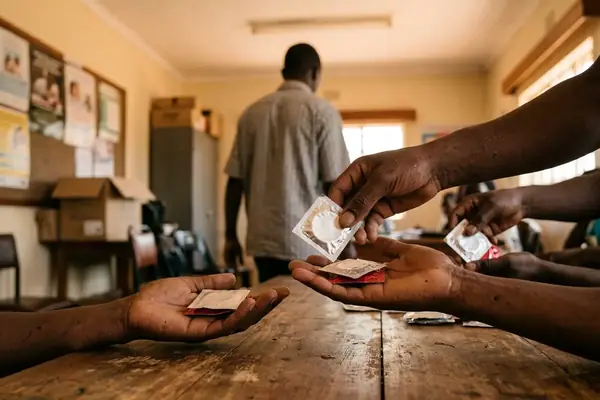
Treat condom language as a precision task, not as a loyalty test. A controversy-first lead forces Catholic readers to defend their identity before they can process the health information. Condom messaging is the most sensitive part of Catholic HIV prevention communication and therefore needs exactness rather than avoidance.
Use CDC HIV prevention guidance as the public-health grounding for condom statements, while keeping the article's Catholic moral framing in the surrounding explanation. Recommend plain-language statements that condoms are a recognized HIV prevention tool while acknowledging that Catholic communities may hold different moral positions on their use. Distinguish between providing accurate health information, advocating access, and making personal moral judgments.
Pair condom information with at least four companion elements: HIV testing, treatment access, stigma reduction, partner communication, and referral pathways. Do not let a condom paragraph stand alone without a next step such as a confidential testing site, clinic referral, educator contact, or pastoral-support pathway.
Build Messages for Parish, Clinic, Classroom, and Campaign Settings
The same sentence carries different risks in a pulpit announcement, clinic intake form, classroom lesson, or policy campaign. Provide setting-specific guidance rather than generic copy.
- Parish setting: Use non-shaming pastoral language and include a referral to confidential HIV testing or counseling rather than asking people to disclose status or sexual history in a parish space.
- Catholic clinic or health program: Include medical accuracy, confidentiality, informed consent, and culturally competent counseling in the same workflow. A clinic handout can be more direct than a pulpit announcement because the clinic setting already carries expectations of confidentiality, informed consent, and individualized counseling.
- Classroom or youth setting: Keep terms age-appropriate, avoid fear tactics, and give a trusted adult or service referral pathway.
- Advocacy campaign: State the policy ask directly. Advocacy efforts led by groups like Catholics for Choice, and historical insights from Frances Kissling: CFFC president, demonstrate that campaigns work best when they protect access to HIV prevention tools without caricaturing Catholic belief.
Expert Tip: Always match the directness of your language to the privacy level of the setting.
Review Every Message for Stigma, Accuracy, and Pastoral Risk
Move your review process before translation, design, printing, or campaign rollout. You do not want your team correcting stigma after the message is already public. Credibility comes from transparent sourcing, community review, and current public-health guidance, not from institutional names alone.
Use at least three review perspectives when possible: public-health expertise, Catholic pastoral or theological literacy, and affected-community input. For a time-sensitive campaign, reserve approximately 5-10 business days for review and revision. For translated materials, add a second check after translation because euphemisms and stigma can shift across languages.
Pre-Publication Review Checklist for Catholic HIV Prevention Messages
- Does the message state the HIV prevention fact plainly before adding pastoral framing?
- Is the HIV information accurate?
- Is condom language clear?
- Does condom language distinguish accurate health information, access advocacy, and personal moral judgment?
- Does the message shame people?
- Does it tell readers what to do next?
Scope and Limitations: What Messaging Can and Cannot Do
Messaging can improve understanding, trust, and referral behavior. It cannot substitute for HIV services, pastoral care, legal advocacy, or medical counseling. The ethical standard is not just what is said, but what support is actually available to the person reading it.
Do not claim measurable behavior change unless the campaign has its own evaluated results. Catholic teaching, local episcopal guidance, national law, and health-system capacity vary by place. Check these factors before adapting a message across regions. Use separate referral language when services differ by setting, such as a public clinic, Catholic health program, campus service, or community-based testing site.
Caution: While this framework optimizes message legibility, it does not resolve underlying doctrinal disagreements or create local service capacity.











Share Your Opinion