
Contents
- Why Condoms Remain a Difficult Catholic Conversation
- The Volunteer Who Chose Conversation Over Confrontation
- What Participants Needed to Say Before They Could Listen
- How Advocates Connect Moral Duty With HIV Prevention
- What Changed: From Silence to More Honest Questions
- What One Volunteer Story Can—and Cannot, Prove
- Practical Lessons for Faith-Based Condom Advocacy
- Want to Join Us?
Why Condoms Remain a Difficult Catholic Conversation
Condoms sit at a hard crossing point for many Catholics: pastoral concern on one side, public-health urgency on the other.
People who care deeply about protecting life may still hesitate when HIV prevention, condom access, and Church teaching enter the same room. That hesitation is not always hostility. Sometimes it is fear of saying the wrong thing. At times it is loyalty to a tradition they do not want reduced to a slogan. It can also be frustration with advocacy that treats Catholic moral seriousness as a problem to be overcome rather than a reality to be engaged.
This article follows one anonymized volunteer advocate, not a parish, diocese, or campaign statistic. The focus is narrow by design: how one person helped make a respectful setting where participants could speak honestly about condoms without being shamed.

The basic tension matters. Silence can leave people without practical prevention information. Dismissive advocacy can push Catholics away before HIV prevention is even discussed. Good facilitation has to distinguish official Catholic doctrine, pastoral interpretation, individual conscience, and public-health harm reduction. Blurring those categories usually creates heat, not clarity.
The Volunteer Who Chose Conversation Over Confrontation
Before the room opened
The volunteer’s identity is kept anonymized because no approved first name or biographical consent is supplied. No Catholic background is claimed here for the same reason. What can be described is the work: preparation, greeting, listening, and careful framing.
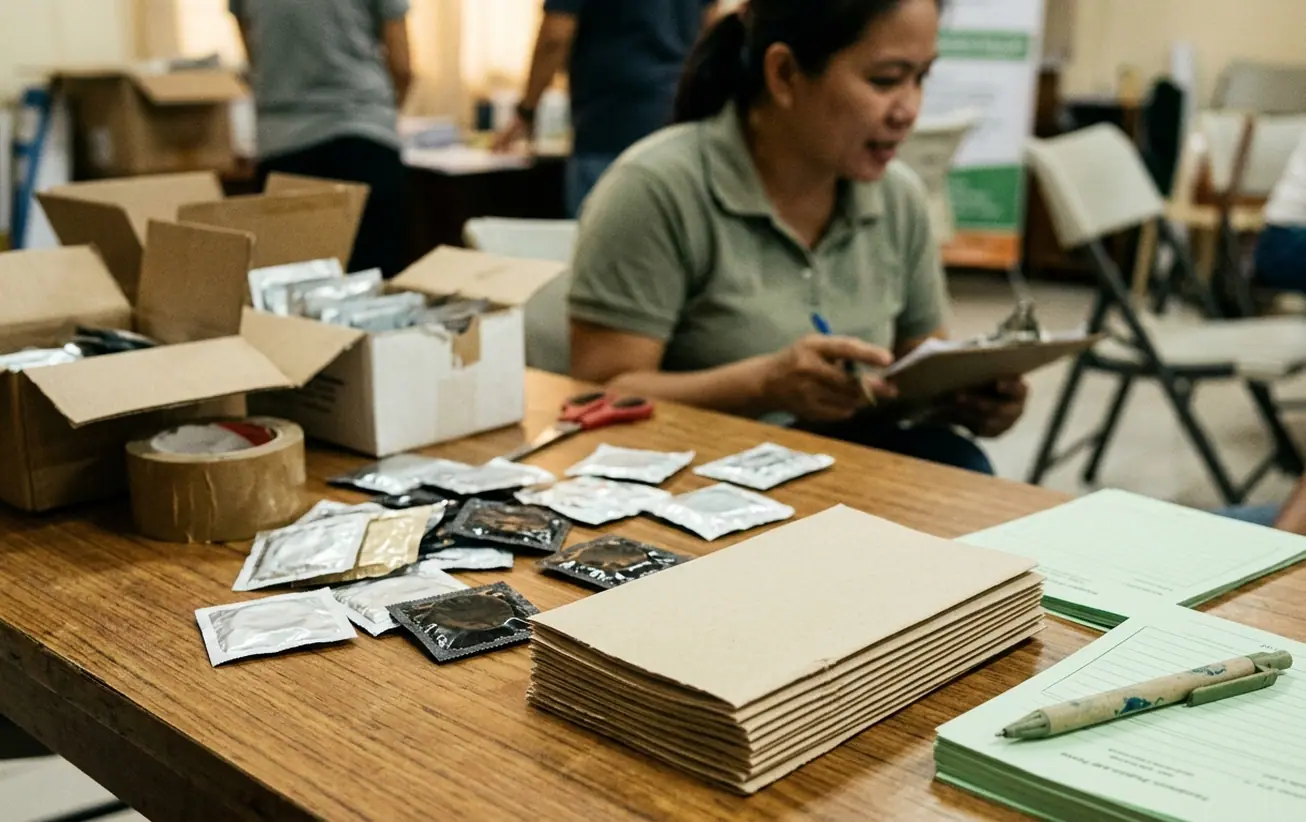
Before participants arrived, the volunteer prepared discussion materials that treated condom access as part of protecting life in HIV-affected communities. The materials did not pretend that Catholic sexual ethics disappear when public health is urgent. They separated the moral question people expected from the prevention information people still needed.
During the engagement
At the door, the volunteer welcomed people without testing their politics. That detail sounds small until a room is already tense.
The volunteer listened to objections before responding. Some participants wanted to talk about doctrine. Others wanted to know whether condom education would encourage behavior they considered wrong. A few were less interested in theory and more concerned about people they knew who were living with HIV or at risk of infection. The volunteer’s method was not to win the first exchange. It was to keep the room open long enough for a harder conversation to become possible.
condoms4life’s role in this local outreach effort was bounded and practical: support for materials and facilitation. The story stays centered on the people in the room, because that is where the moral and public-health work actually happened.
What Participants Needed to Say Before They Could Listen
Stakeholder voice
Participants first needed permission to name discomfort.
An anonymized paraphrase, not a quotation, captures the kind of concern the volunteer had to hold: a participant wanted HIV prevention tools discussed, but feared that speaking favorably about condoms would sound like rejecting Church teaching altogether.
That is a real pastoral bind. It cannot be answered well by rolling one’s eyes at doctrine. It also cannot be answered well by refusing to discuss HIV prevention in plain terms.
The systemic challenge
Several concerns tend to cluster in these conversations: fear of contradicting Church teaching, concern for people living with HIV, distrust of political messaging, and a desire for practical prevention information. The challenge is not simply that participants lack facts. The challenge is that facts arrive inside a moral vocabulary people already use: sin, responsibility, care, conscience, dignity, scandal, duty.
A failure case is easy to imagine because it happens often enough in advocacy spaces: an advocate treats Catholic hesitation as ignorance or bad faith, and participants withdraw before the conversation reaches HIV prevention at all.
The pathway forward
The volunteer’s first task was not persuasion. It was permission.
Permission did not mean every claim became equally sound. It meant people could ask conscience-based questions before receiving rebuttals. It meant a participant could say, “I am worried this contradicts what I was taught,” and still remain in a room where condoms, HIV transmission, and prevention access were discussed plainly.
How Advocates Connect Moral Duty With HIV Prevention
The core argument used by Catholic condom advocates is more careful than a campaign slogan: protecting life can include honest education about HIV prevention and condom access, especially where silence increases vulnerability.
World Health Organization guidance identifies condoms as part of combination HIV prevention; the WHO HIV and AIDS fact sheet is a useful public-health reference for that baseline. The Catholic advocacy question is what moral language can responsibly carry that fact into faith-shaped settings.
Public-Health Sources
Monitoring reports show the public-health consensus in broad terms: HIV prevention works best through combination approaches rather than one isolated tool. For Catholic advocates, that does not end the moral discussion. It sets the factual floor beneath it.
The vocabulary matters. Conscience is not the same as preference. Human dignity is not the same as privacy alone. Care for the sick has concrete meaning when people living with HIV are treated as neighbors rather than symbols. Preferential concern for vulnerable communities requires attention to who bears the cost when prevention information is withheld. Responsibility in relationships includes truth-telling about risk.
Catholics for Choice and the condoms4life campaign have long worked in this terrain of public argument, including the tradition associated with Frances Kissling as CFFC president. The point is not to flatten Catholic ethics into one permissive sentence. The point is to insist that sexual ethics and harm-reduction practice must be discussed honestly when lives and health are at stake.
What Changed: From Silence to More Honest Questions
Community need
The need was not a dramatic conversion story. It was quieter: participants needed a way to ask direct questions without feeling trapped between loyalty to faith and concern for human survival.
In settings like this, measurable claims should stay modest unless records support them. No attendance count, parish name, workshop date, or local outcome metric is supplied here. So the impact belongs in observed human terms: clearer questions, deeper conversation, and more willingness to stay with the subject rather than shut it down.
Program response
The volunteer created room for written and spoken concerns, framed condom access as a life-protection issue, and kept returning to shared duties instead of partisan labels. That sequence gave participants a practical route into the topic. They did not have to abandon moral seriousness to ask about prevention.
Measured impact, without inflated metrics
Program evaluation revealed a basic lesson from this kind of facilitation: the first sign of movement is often not agreement. It is a better question.
One participant asking directly how condom access relates to caring for a partner matters. Someone staying after a session to raise a concern privately matters, if that detail is verified in the setting. A request for materials matters because it means the conversation did not end at discomfort. None of those details should be dressed up as campaign-wide proof. They are still meaningful.
Caution: Do not turn one room into a national map of Catholic opinion. That overstates the evidence and weakens trust with faith leaders, journalists, and public-health workers who need careful claims.
What One Volunteer Story Can—and Cannot, Prove
This story is a pastoral and practical example, not a representative survey.
It does not speak for every Catholic, every parish-adjacent gathering, every campus ministry room, or every Catholic health ministry. A community health workshop may require different language around authority and confidentiality than a discussion held near a parish. A campus setting may involve different pressures from peers, parents, or chaplains. Those differences are not footnotes; they change the facilitation task.

The evidentiary weight here is narrow: it can show how respectful condom conversations may be held, but it cannot establish broad Catholic opinion or measure HIV-prevention outcomes.
That limitation does not make the story weak. It makes it usable. A volunteer story can show sequence, tone, and practical judgment. It can reveal where a conversation gets stuck. It can help advocates avoid the common mistake of treating Catholic concern as something to bulldoze. It can also remind Catholic participants that moral seriousness does not require silence about HIV prevention.
Practical Lessons for Faith-Based Condom Advocacy
The volunteer’s approach offers a workable sequence for educators, parish discussion leaders, journalists, public-health workers, and reproductive-rights advocates.
- Begin with the shared duty to protect life. Do not start by demanding that participants accept every policy conclusion before they have spoken.
- Define terms separately. Doctrine, conscience, pastoral interpretation, and harm reduction are not interchangeable.
- Invite questions before rebuttals. A question asked honestly is not an attack on advocacy.
- Use plain HIV-prevention language. Avoid euphemisms when discussing condoms, transmission risk, and access to prevention tools.
- Do not humiliate uncertainty. Shame may produce silence, but silence is not agreement.
Prepare a short response to common concerns about Church teaching, then ask what safety, dignity, and responsibility require in real circumstances.
The strongest facilitators do not pretend the conflict is simple. They keep the categories clear and the human stakes visible. They can say that Catholic teaching matters to many participants while also saying that people vulnerable to HIV need practical tools, honest information, and care that reaches them before harm occurs.
The strongest Catholic condom conversations often begin with the shared duty to protect life, not with winning an argument.
Want to Join Us?
Volunteer work in this field does not always look like public debate. Often it looks like helping someone stay in a difficult conversation approximately five minutes longer than they expected.
Readers who want to support this work can help with outreach, share resources, host respectful discussions, or support advocacy campaigns that are faithful to human dignity and honest about HIV prevention. Specific settings will call for different preparation. The moral center remains steady: listen carefully, speak plainly, and refuse to let silence decide who receives life-saving information.
Condoms save lives. Catholic communities have a vital role to play when they choose courage, conscience, and care for people made vulnerable by silence.









Share Your Opinion