

Why a Condom Campaign Became a Catholic Flashpoint
Condom access isn't just a private lifestyle issue. In HIV-affected communities, it is a Catholic public-responsibility question. During the early-2000s advocacy cycle, organizations like Catholics for Choice, guided by CFFC president Frances Kissling, recognized that public HIV prevention messaging and Catholic health systems regularly intersected. We designed Condoms4Life as an advocacy campaign, not a quiet awareness project. We wanted to pressure religious and public institutions to confront the real-world consequences of condom policy.
The controversy mattered far beyond church politics. Catholic influence shaped hospitals, schools, development agencies, and public messaging. When institutions with that level of social and service-delivery influence restrict health information, the impact ripples through entire communities.
The Public-Health Problem the Campaign Tried to Name
Public-health consensus recognizes correctly used condoms as a proven component of HIV risk reduction, alongside testing, treatment access, and harm reduction. Yet, religious restrictions and moral stigma consistently complicated these messages. In communities where Catholic institutions held influence, clinics, schools, and pastoral counseling spaces often avoided discussing condoms directly.
We made a specific moral claim. Withholding or discouraging condom information in HIV-affected communities deepens preventable harm. The gap between established condom-based HIV prevention guidance and religiously constrained communication left vulnerable populations without the tools they needed to protect themselves.
Four Sources of Controversy: Doctrine, Language, Visibility, and Power
The dispute rested on four distinct pressure points. First, doctrine. Catholic moral teaching traditionally rejects artificial contraception. Critics often cited Humanae Vitae and Catechism §2370 to explain the institutional position. We separated the disease-prevention frame from the family-planning frame, centering our argument squarely on HIV prevention and conscience.
Second, language. Direct campaign messaging cut through euphemism. We forced audiences to confront the word "condom" in Catholic public life.
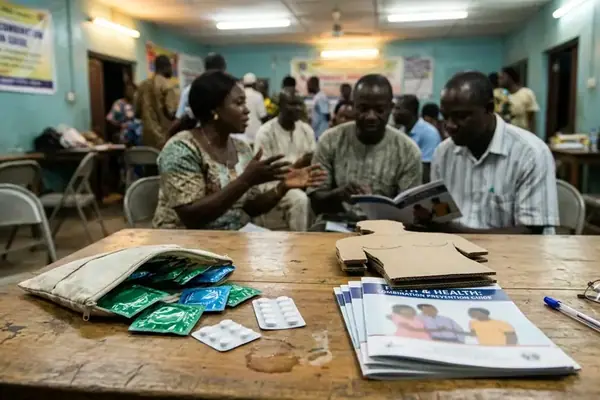
Third, visibility. Posters, print materials, and public-facing slogans generated stronger reactions than quiet policy memos ever could. We used outreach to journalists and advocacy partners to amplify the message.
Finally, power. The same condom message lands differently in a Catholic hospital versus a public-health clinic because institutional obligations differ. Authority, audience risk, and institutional rules dictate how information flows.
Outcomes Beyond Visibility: What the Controversy Made Possible

Controversy can show impact. We evaluate the campaign by the space it opened for public discussion and coalition-building rather than immediate institutional agreement. Program evaluation revealed broader debate and clearer language around condoms in Catholic contexts. We saw increased requests for educational materials from organizers on the ground.
Backlash matters when attached to a traceable output, like a media inquiry, an institutional response, or a meeting request. Stakeholder feedback indicates that our multi-year coalition coordination helped partners navigate these responses. Partner discussions highlighted shared materials and media-response coordination as key benefits of the campaign's visibility.
Resource Allocation: What the Campaign Required
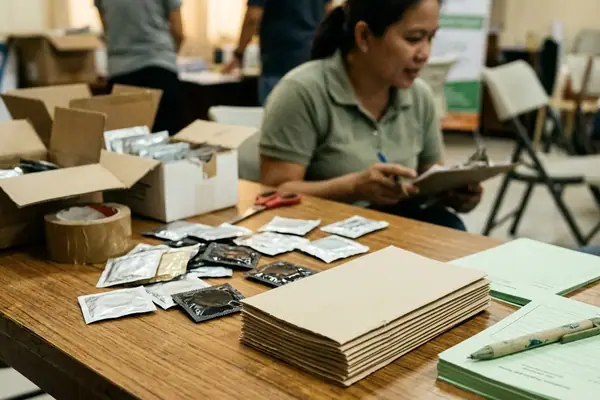
Advocacy campaigns spend heavily on communications capacity. Rapid response, clear language, and public distribution change debate conditions. To reach people effectively, we allocated resources across specific functions: message development, design and printing, digital publication, media handling, partner coordination, and policy outreach.
Staff, volunteers, donors, and partners enabled this capacity. We rely on these functional categories rather than unaudited financial claims to maintain a rigorous impact report. Educational support and policy outreach require sustained investment to translate public visibility into practical tools for health advocates.
Scope, Limitations, and Accountability
This report analyzes why the campaign was controversial and what forms of advocacy impact we can responsibly discuss. We classify claims into three levels: documented outputs, plausible influence, and proven outcomes. Campaign records prove intent and outputs; official Catholic documents prove doctrinal positions; contemporaneous media coverage proves public visibility.
While our campaign records demonstrate shifts in public dialogue, this analysis cannot claim direct changes in population-level HIV incidence or official church doctrine. Claiming the campaign reduced HIV transmission without campaign-period epidemiological evidence would turn an impact report into unsupported advocacy copy. We maintain strict evidence discipline.
Lessons for Catholic Health Advocates Today
Advocates must decide what success means before launching public actions. Is it media inquiry, material distribution, or coalition alignment? Name the harm clearly. Distinguish critique of institutions from contempt for believers. Success is never guaranteed, but preparation mitigates risk.
A useful launch file contains a core message, theological objection responses, a public-health evidence summary, spokesperson guidance, and an escalation plan. You must also include a documentation template for tracking requests and opposition.
Expert Tip: Prepare responses to predictable objections before the public launch, especially where doctrine, conscience, and public-health evidence overlap.
Main Point: Controversy can serve advocacy when it clarifies a moral conflict and expands access to life-saving information, but only when paired with accountability and evidence discipline.
Join the Work: Learn, Share, Support
We invite you to continue this work. Participation protects health, conscience, and honest public debate. Catholics can study and discuss conscience claims. Health professionals can share prevention evidence. Educators can use accurate materials.
Journalists can examine institutional influence, and policymakers can scrutinize service-delivery rules. Learn more, share resources, brief local institutions, or support educational capacity. The work of protecting public health requires all of us.











Share Your Opinion