Public-Health Experts in the Catholic Condom Debate
9 to read
Why Public-Health Voices Matter in a Catholic Moral Debate
Catholic condom debates often get squeezed into a false choice: doctrine on one side, secular health policy on the other. That framing misses the operational question public-health practitioners keep returning to: what happens to people at risk when prevention information, referrals, or tools are withheld?
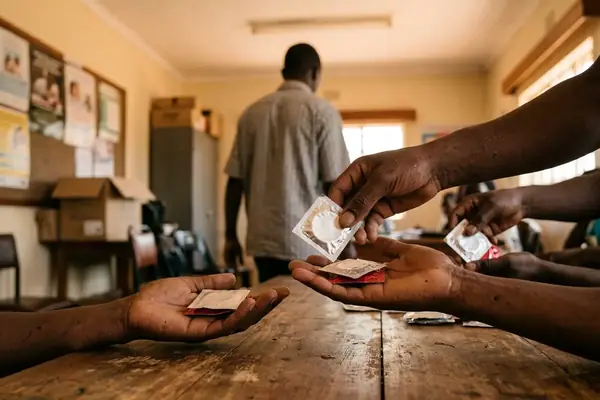
That question matters well beyond formal church statements. Catholic institutions can shape HIV-prevention messages through parish counseling, Catholic school health education, hospital discharge counseling, aid-program materials, and referrals from faith-based clinics. A sentence written for a policy memo can become sermon guidance, staff training, classroom language, a referral list, or a clinic intake form. Each translation changes what a person hears at the moment they need help.
Public-health experts do not need to dismiss Catholic moral reasoning to challenge policies that may limit condom access or accurate prevention information. The stronger approach is more disciplined. Ask whether condoms are available, whether accurate information is provided, whether counseling is confidential, and whether people at risk are referred to competent HIV services.
In program reviews, I have seen the most serious harm appear not in loud public arguments, but in quiet omissions: a counselor who avoids the condom question, a school lesson that names HIV but not prevention, a referral sheet that lists general clinics but not HIV services.
What Experts Actually Bring to the Condom Debate
Different expertise answers different questions
No single expert owns this debate. Epidemiologists clarify transmission risk and population patterns. HIV clinicians address testing, treatment adherence, counseling, and follow-up care. Sexual-health educators work with literacy, language, and age-appropriate teaching. Behavioral scientists examine stigma, partner negotiation, coercion, and the gap between stated norms and lived behavior. Medical ethicists and public-health program designers help connect evidence to service delivery.
Global public-health guidance treats condoms as one part of combination HIV prevention, not as a stand-alone cure for the epidemic. Testing, treatment access, prevention medication where appropriate, harm-reduction services, education, and stigma reduction all belong in the same prevention frame. Readers who want a general grounding can start with the WHO HIV/AIDS overview.
What experts look for in real settings
The practical questions are plain. Who is exposed to HIV risk? What prevention information is being withheld or distorted? Are condoms physically and financially accessible? Can people use prevention tools without retaliation, shame, or loss of care?
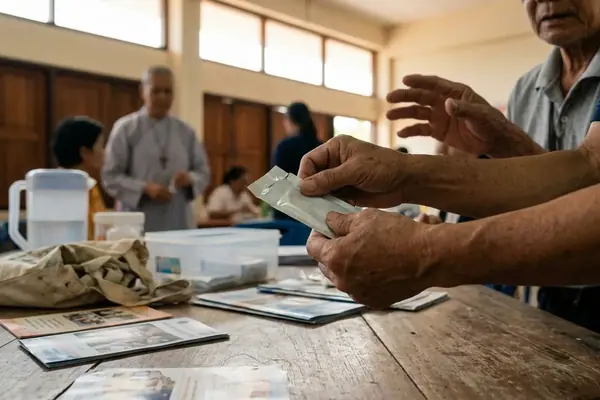
Condom counseling is not only a mechanics lesson. It involves privacy, consent, partner violence risk, literacy level, local language, trust in the clinic, and whether the person can return for follow-up care. A technically accurate message can still fail if the room is unsafe, the language is unclear, or the person fears being recognized at the service site.
Practical point: When interviewing an expert, ask which part of the problem they are addressing: transmission risk, clinical counseling, education, ethics, implementation, or lived experience. The answer prevents one source from carrying more authority than they actually have.
Where Catholic Teaching and HIV Prevention Collide
The main tension is not difficult to name. Catholic sexual teaching traditionally emphasizes chastity, marital fidelity, and openness to life. Public-health practice asks what reduces harm in the world as people actually live, including when ideals are absent, contested, or impossible to enforce safely.
Moral ideals and harm-reduction practice
Experts can support abstinence and fidelity as meaningful risk-reduction choices while still arguing that condom access is necessary when risk remains. That distinction matters. The dispute is not simply whether abstinence or mutual fidelity can reduce HIV risk; it is whether policy also addresses remaining risk when abstinence, mutual fidelity, or equal partner negotiation is absent.
Pastoral cases change the stakes quickly: a married serodiscordant couple, an adolescent seeking basic HIV information, a migrant without stable clinic access, a sex worker negotiating condom use, or a person who fears being seen entering an HIV service site. In serodiscordant relationships, counseling may need to cover testing, antiretroviral treatment adherence, viral-load monitoring where available, pregnancy intentions, condom access, and disclosure safety.
When silence becomes a service barrier
Consider a parish bulletin that says condoms are morally wrong but gives no referral path for a married person whose spouse is living with HIV. The result is not merely doctrinal clarity. It can produce silence at the exact point where counseling is needed.
Messaging that labels condoms only as moral failure can create operational barriers. People may avoid asking questions. Educators may omit basic prevention facts. Clinic staff may hesitate to make referrals because they do not know where institutional boundaries fall.
The Evidence Questions Experts Ask Before Making Policy Claims
A practical way to evaluate the Catholic condom debate is to test claims by source, mechanism, and implementation. Who is speaking? What kind of authority do they invoke? What behavior do they expect from people? What happens when the message moves into a classroom, clinic, parish office, or humanitarian program?
A checklist for public claims
Does the claim distinguish condom access from condom promotion, or does it treat any availability of condoms as endorsement of all sexual behavior?
Does it address correct and consistent condom use, or does it cite condom failure without explaining instruction, access, storage, fit, or partner cooperation?
Does it consider gender power, coercion, stigma, poverty, migration status, and the ability to negotiate safer sex?
Is the speaker citing official health guidance, clinical experience, Catholic doctrine, pastoral judgment, personal opinion, or campaign messaging?
Does the policy claim consider both individual counseling and population-level effects, including whether people receive accurate prevention information before exposure to risk?
Journalists and advocates should be especially careful with source categories. A bishop may speak from doctrine and pastoral governance. A clinician may speak from HIV care. A theologian may interpret moral tradition. A person living with HIV may identify barriers that no institutional source can see from a distance. Those are different forms of knowledge, and they should not be flattened into one generic authority.
Source Questions
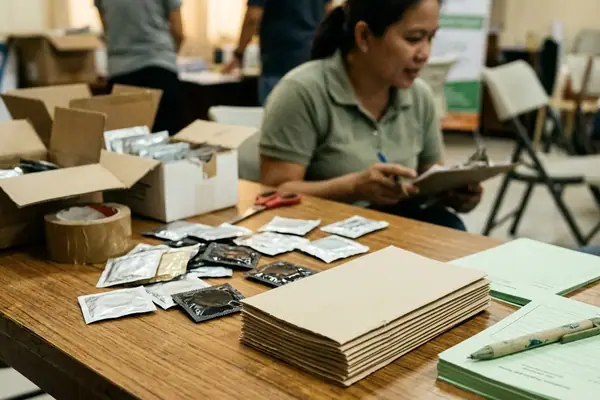
Monitoring reports show that prevention policy becomes most important when institutional language meets practice. That is where the evidence questions belong: in staff training, referral lists, counseling scripts, school materials, intake forms, and patient-facing guidance. The question is not whether a document sounds coherent. The question is whether it helps a person reach accurate, confidential HIV prevention support.
How Advocates Can Use Expert Input Without Flattening Faith
Advocates do better when they separate evidence from moral judgment. Campaign briefs should use three working columns: public-health evidence, Catholic moral concern, and policy ask. That simple structure keeps a prevention claim from pretending to settle every theological question.
Tasks for different audiences
Reproductive-rights advocates: quote experts precisely. If a clinician speaks about condom access for HIV prevention, do not turn that into a blanket statement about Catholic sexual ethics.
Catholic reform groups: invite theologians and healthcare workers into the same conversation. Groups such as Catholics for Choice have often worked at this intersection, and figures such as Frances Kissling, CFFC president, helped make public space for Catholic dissent on reproductive ethics.
Educators: teach the difference between prevention information and moral endorsement. Students and adults both need accurate language before risk appears.
Public-health professionals: describe the service barrier, not only the desired policy. Confidentiality, transport to clinics, partner pressure, stigma, and lack of accurate prevention information are concrete obstacles.
Useful interview pairings can keep the discussion honest: an HIV clinician with a Catholic healthcare worker, a public-health educator with a pastoral counselor, or a medical ethicist with a theologian familiar with Catholic moral language. The point is not to stage a theatrical debate. It is to prevent one discipline from pretending it can do the work of all the others.
Caution: An advocacy brief that quotes a clinician as if the clinician has settled Catholic theology gives critics an easy target. The HIV-prevention evidence may be sound, but the sourcing has been overstretched.
Scope and Limits of Expert Authority
Public-health experts can explain risk, prevention options, access barriers, counseling quality, and likely consequences of policy choices. They cannot, by professional authority alone, settle sacramental, doctrinal, or ecclesial authority questions inside Catholicism. In this debate, evidence maps preventable harm more clearly than it resolves church authority.
That limit should not weaken the evidence. It should make the argument cleaner. A Catholic hospital, a school curriculum, a humanitarian aid program, and a parish marriage-preparation class may all invoke Catholic teaching, but the public-health consequences of their condom messaging differ. Treating them as interchangeable produces weak reporting and weaker advocacy.
A cleaner sourcing practice
Label each source by function: doctrine, pastoral experience, clinical HIV care, public-health guidance, program implementation, or lived experience. Avoid treating one episcopal statement, clinic practice, theologian interview, or aid-program policy as representative of all Catholic positions. Avoid treating one public-health professional as representative of all prevention practice.
Catholic teaching is not monolithic in lived practice. Bishops, theologians, healthcare workers, lay Catholics, and Catholic aid organizations may emphasize different priorities when HIV risk, marriage, pregnancy, poverty, or violence enter the conversation. Public-health evidence helps clarify consequences; it does not erase those internal differences.
Key Takeaways for Journalists, Educators, and Faith Leaders
The strongest Catholic condom debate content is evidence-based, morally serious, and attentive to the lives of people facing HIV risk. It does not mock faith, and it does not hide preventable harm behind polite silence.
Experts clarify risk, access, counseling quality, stigma, and real-world implementation.
Prevention information should be distinguished from moral endorsement.
Journalists should identify whether a source is speaking from doctrine, clinical care, public-health guidance, pastoral experience, or opinion.
Educators need accurate prevention language before students or parishioners face risk.
Faith leaders should ask whether their message includes a confidential referral path for people who need HIV services.
People living with or vulnerable to HIV should remain central, especially where shame, silence, or lack of access increases preventable harm.
Main point: Public-health evidence and Catholic concern for life and human dignity can be discussed together when claims are precise, sources are clearly identified, and the people most affected by HIV risk are not treated as abstractions.












Share Your Opinion