
Why the Philippines and Kenya Matter for Catholic Sexual-Health Advocacy
Start with the public-health question
Condom access is not an abstract church-versus-state argument when someone is weighing HIV risk, a pregnancy fear, or the shame of asking a clinic worker for help.
The Philippines and Kenya matter because both countries sit at the intersection of Catholic influence, public-health duty, youth education, and community trust. The Philippines has a deeply Catholic national identity and a long-running conflict over reproductive-health law implementation. Kenya has strong faith-based health infrastructure and HIV-prevention needs shaped by county health systems, community health workers, and clinic referral pathways.
I read these settings first: where is prevention information blocked, where does fear silence a conversation, and where can a person get a direct referral without being judged?
That framing changes what counts as impact. A policy win matters, but it is not the only marker. Shifts in access, dialogue, stigma reduction, referral pathways, and informed conscience can be just as important when the subject is condoms in Catholic settings.


Main Point: In both countries, Catholic sexual-health advocacy should be judged by whether people at risk can move from silence to safer decision-making, not only by whether advocates win a public argument.
The Policy and Church Pressure Points Advocates Must Navigate
Philippines: law, implementation, and Catholic public identity
The Philippines has a national reproductive-health statute enacted in 2012, but a law on paper does not settle access in local government units, schools, procurement systems, or public messaging. Advocates have to track implementation, not just legislation.
The pressure points are familiar to anyone who has followed reproductive-health disputes there: contraception procurement debates, youth education, Catholic episcopal statements, school rules, clinic-level practice, and public narratives about morality. Philippine advocacy may stall when legal literacy is weak even if public-health messaging is strong.
A national Catholic statement against contraception does not automatically predict what a parish nurse, school counselor, or clinic administrator will do when a person asks privately about HIV risk. That is why actor mapping matters. Bishops, diocesan offices, Catholic school leaders, public-health agencies, reproductive-rights advocates, journalists, youth educators, and referral partners all shape the practical answer a person receives.
Kenya: health delivery, clergy influence, and referral trust
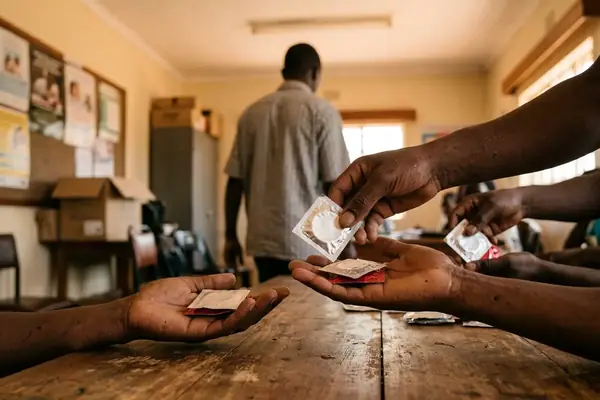
Kenya’s pressure points look different. County-level health delivery, HIV-prevention programming, community health workers, Catholic and other faith-based providers, and local clergy all influence whether prevention conversations are treated as shameful or protective.
In Kenyan settings, a technically correct condom message can still fall flat if it is disconnected from community referral practice. Kenyan advocacy may stall when referral pathways are weak even if community trust is strong.
The pathway forward is respectful engagement with clergy and Catholic health providers while keeping medical prevention clear. The goal is not to pretend there is no moral disagreement. It is to prevent moral disagreement from becoming denial of lifesaving information.
Advocacy Strategies That Showed Promise
Six categories worth tracking
The strongest strategies are the ones that move people from moral polarization toward safer action. I would group them into six working categories: policy monitoring, clergy and lay dialogue, public-health messaging, media engagement, youth education, and referral support.
- Policy monitoring: Track laws, local implementation barriers, procurement debates, school guidance, and public-health agency statements.
- Clergy and lay dialogue: Create settings where Catholic leaders and lay people can discuss prevention, conscience, and care without caricature.
- Public-health messaging: Explain condoms through HIV prevention, harm reduction, and the protection of life.
- Media engagement: Correct misleading frames before they harden into public assumptions.
- Youth education: Support age-appropriate materials that distinguish moral teaching from withholding health information.
- Referral support: Give people a practical next step when they need counseling, testing, condoms, or youth-friendly services.
Different settings need different tools
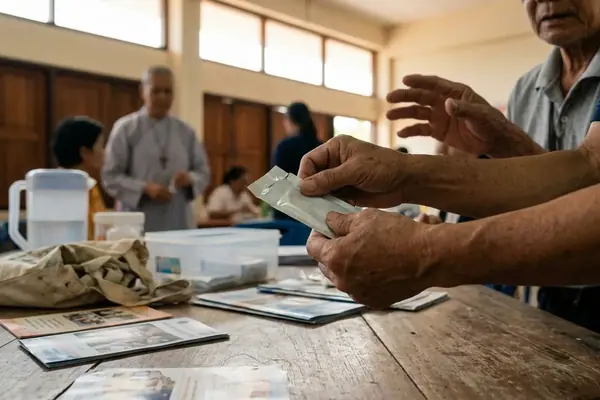
In the Philippines, useful materials often look like legal-literacy briefers: what state health obligations require, where local implementation can break down, how youth education is being framed, and why public-health information cannot be reduced to moral approval.
In Kenya, the better tools are often closer to practice: stigma-sensitive HIV-prevention scripts, clinic-to-community referral cards, training prompts for community health workers, and dialogue formats that allow clergy to discuss prevention without appearing to abandon Catholic moral concerns.
The Catholic dimension is distinctive. This work does not simply oppose doctrine. It reframes condom access through life, conscience, prevention, harm reduction, and care for people facing HIV risk. That is why the older public witness of Catholics for Choice, including Frances Kissling, CFFC president, still matters: it made room for Catholic argument inside reproductive-health debates rather than leaving the field to official hierarchy alone.
Caution: A referral card can fail if it lists only services that are geographically distant, youth-unfriendly, unaffordable, or unwilling to discuss condoms directly.
Outcomes Beyond Activity Counts
Separate what advocates did from what changed
Meetings, workshops, op-eds, briefing papers, translated resources, and dialogue sessions are outputs. They matter, but they are not the same as impact.
For an impact report, I would track outputs and outcomes in separate columns over reporting periods in the range of 6 to 12 months. That discipline keeps activity volume from being mistaken for social change. A busy campaign can still miss the person who needs a private, accurate answer about HIV prevention.
Useful outcome areas include public narrative change, policymaker awareness, faith-leader engagement, health-worker confidence, youth-education clarity, and a clearer distinction between moral disagreement and medical prevention. None of those require invented figures. They require careful documentation: date range, actors involved, advocacy action, observed change, and evidence source.
What credible evidence can look like
A Philippine policy-setting example should identify the local implementation issue, the legal-literacy material used, the officials or educators reached, and the change observed in the public or administrative framing. A Kenyan community-health example should identify the referral setting, the health workers or clergy involved, the prevention script or referral tool used, and whether conversations became more direct and less fear-driven.
Stakeholder feedback indicates one recurring lesson across both countries: people often need permission to ask the first question. Once the question is allowed, technical prevention information becomes easier to discuss.
For baseline medical context, the World Health Organization HIV and AIDS fact sheet remains a useful public reference point. It should not replace local surveillance or clinic records, but it helps keep the discussion anchored in HIV prevention rather than culture-war shorthand.
Resource Allocation Summary
Report by function, not by inflated reach
Resource reporting should be plain. Unless audited figures or approved financial records are available, do not list dollar amounts, donor totals, or budget shares. Describe how staff time, volunteer effort, research capacity, translation, communications, and coalition participation are used.
Policy research and monitoring supports legal literacy, implementation tracking, and issue briefings. Evidence can come from published laws, agency statements, meeting records, and documented advocacy materials.
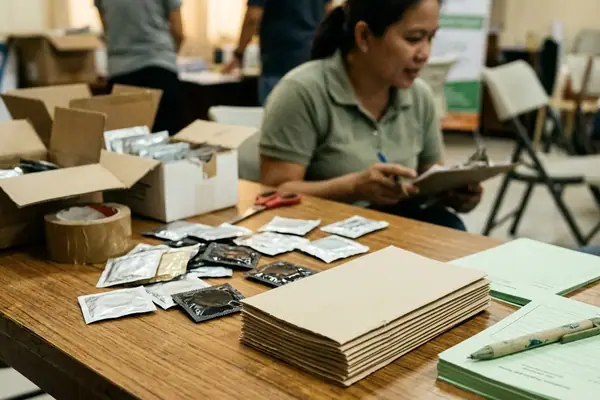
Community education turns policy language into usable guidance for youth educators, parents, lay leaders, and health workers. The evidence trail should include the material produced, the audience served, and the setting where it was used.
Faith-leader engagement requires patience. The activity may be a small dialogue, a private briefing, or a structured conversation with clergy and lay Catholic professionals. The purpose is not to manufacture agreement; it is to reduce fear and make prevention language morally intelligible.
Communications and media response can shift national debate when misinformation spreads quickly. Legal and media work can change public framing, while clinic-facing and community-facing work can make prevention conversations safer for people seeking help.
Coalition participation, translation or localization, and administrative support are often less visible, but they keep the work grounded. A translated handout, a verified referral list, or a meeting note may do more practical good than a polished national statement.
Scope, Limitations, and Accountability
What this kind of report can and cannot support
Country-level analysis cannot represent every diocese, parish, clinic, school, local campaign, or health-worker practice in the Philippines or Kenya. Local examples should be used only when records identify the setting, timeframe, actors, and observed change.
Impact claims should be labeled carefully: direct, indirect, contested, or long-term. Condom advocacy in Catholic contexts rarely moves in a straight line because Catholic identity, public-health policy, and sexual morality are politically sensitive. The evidence is strongest for documented advocacy context, not for estimating individual behavior change.
This report should not claim uniform Catholic support for condom access. It should not quantify impact without named evidence. It should not reduce HIV prevention to condom distribution alone.








Share Your Opinion