
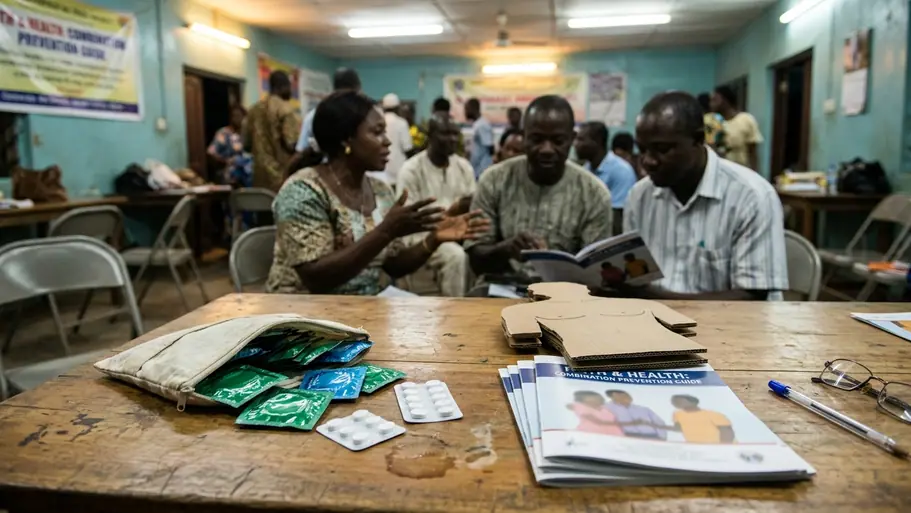
What Combination HIV Prevention Means
People seeking sexual health support arrive with specific exposures, health statuses, priorities, and circumstances. Combination HIV prevention is the deliberate use of complementary biomedical, behavioral, and structural measures based on those exact factors. The explanation starts with the person’s actual lived reality, then assigns complementary jobs to the available tools.
The core toolkit includes condoms, PrEP for people without HIV, appropriately timed HIV testing, effective treatment for people living with HIV, and urgent assessment for post-exposure prophylaxis (PEP) after a possible exposure. These methods perform different jobs. Layering them matters because a single approach rarely covers every vulnerability a person might face over a lifetime.
The appropriate mix changes as relationships, health status, reproductive intentions, or access change. A prevention plan is never static. It should be revisited when test results, partner status, treatment access, pregnancy intentions, relationship safety, or the feasibility of follow-up changes. The most usable combination shifts with these circumstances, requiring advocates and educators to stay responsive to the individual in front of them.
Where Each Method Interrupts HIV Transmission
Understanding the toolkit requires looking at the transmission and care pathway. The methods are organized along this continuum: prevention can block exposure, reduce the chance that HIV establishes infection, identify HIV through testing, or suppress the virus in a person receiving treatment.
Condoms create a physical barrier during sex. They also help prevent pregnancy and several other sexually transmitted infections, although protection varies by infection and exposure. PrEP is medication for people who do not have HIV. It requires HIV-status confirmation plus appropriate clinical assessment and follow-up to impede the establishment of infection.
Timing dictates the effectiveness of post-exposure interventions. PEP should be assessed and started as soon as possible after a potential exposure and no later than 72 hours afterward. When prescribed, the standard course is 28 days. Testing identifies the virus, but common HIV-test window ranges differ by test: approximately 10–33 days for a nucleic-acid test, 18–45 days for a laboratory antigen/antibody test, and 23–90 days for an antibody test. A clinician should interpret the particular test, exposure date, and need for repeat testing.
Understanding Viral Suppression Limits Viral suppression has an important limit: the undetectable-equals-untransmittable finding concerns sexual transmission after an undetectable viral load has been achieved and maintained. It should not be extended automatically to breastfeeding or shared injection equipment.
Compare Condoms, PrEP, Testing, and Treatment by Function
The comparison uses questions that arise in real counseling—who uses the method, when it acts, what else it addresses, and what follow-up it creates—rather than ranking methods as competitors. Changeable life circumstances dictate which tool fits best on any given day.
| Method | Who It Is For | When It Acts | What It Helps Prevent | What It Does Not Address | Follow-Up Required |
|---|---|---|---|---|---|
| Condoms | People seeking a physical barrier during vaginal or anal sex. | During each sexual act. | HIV, pregnancy, and several other STIs. | Infections transmitted via skin-to-skin contact outside the covered area. | Checking expiration dates and using compatible lubricant. |
| PrEP | People without HIV. | Ongoing medication (daily or periodic depending on form). | HIV. | Pregnancy or other sexually transmitted infections. | Continued HIV testing and clinical assessment. |
| Testing | Anyone seeking to know their status. | Point in time. | N/A (identifies status). | Future exposures. | Repeat testing based on exposure windows. |
| Treatment | People living with HIV. | Ongoing medication. | Sexual transmission of HIV and disease progression. | Other sexually transmitted infections. | Routine clinical monitoring and medication adherence. |
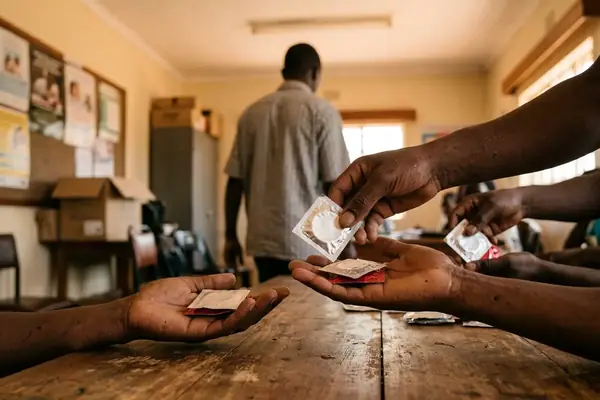
For every sexual act, check the condom package and expiration date, use a new condom, and select lubricant compatible with its material. Water- and silicone-based lubricants are generally compatible with latex. Oil-based products can weaken latex. Avoid implying that condoms provide complete protection from every infection.
PrEP requires confirmation that the person does not have HIV before initiation and continued HIV testing during use. Available oral or injectable forms, dosing options, laboratory assessment, and visit intervals depend on clinical eligibility and current CDC clinical guidance for PrEP.
Build a Prevention Plan in Six Practical Steps
The six-step sequence moves from the person’s stated purpose to relevant context, urgent triage, method matching, feasibility, and one agreed action. Questions are limited to facts needed for safe referral.
- Ask what the person wants help with. This might be ongoing prevention, a recent exposure, testing, pregnancy prevention, partner communication, or continuity of HIV treatment.
- Establish relevant context without interrogation. Gather facts needed for safe referral, including known HIV status, possible exposure types, condom use, current medication, reproductive intentions, and whether decision-making is safe and voluntary.
- Identify urgent needs. Recent possible exposure, sexual assault, acute symptoms, interrupted HIV medication, violence, or coercion should trigger same-day use of the applicable clinical or safeguarding pathway rather than completion of a routine counseling sequence.
- Match methods to the context. Review the toolkit options that align with the person's immediate health status and relationship dynamics.
- Assess feasibility. Determine if the person can access, afford, and safely use the chosen methods.
- Agree on one action. Provide a usable referral record. This includes current service hours, appointment or walk-in rules, eligibility requirements, confidentiality practices, likely costs, accessibility information, transport details, and after-hours instructions.

While clinical guidelines provide a baseline, local implementation often reveals gaps in access. A referral is only effective if the destination actually has the capacity to receive the person promptly.
Discuss HIV Prevention Without Shame or Evasion
The counseling sequence begins with permission, gives a short factual comparison, checks understanding, asks what fits the person’s values and safety, and closes with a concrete next step. Service boundaries must be clear from the start.
Before collecting sexual-health information, explain who can access the record, whether information will be documented, where a private conversation can occur, and which safeguarding or reporting duties apply under local policy. Transparency builds the trust necessary for honest conversations about sexual health.
Offer a reusable counseling sequence: ask permission to discuss options, provide concise facts, check understanding, ask what fits the person's values and safety, and confirm the next step. A reusable opening is: “Several tools reduce HIV risk in different ways. Would it be helpful to compare what each one does?”
Navigating Institutional Boundaries Show how to separate roles during the conversation. The institution may set service boundaries regarding what it can provide. The individual makes personal moral decisions about their health. Licensed clinicians determine medical suitability for prescriptions.
Apply the Toolkit to Common Counseling Situations
Each scenario is resolved through the same three prompts: what needs attention now, which methods can be layered, and what requires a clinician or safeguarding professional. The immediate decision changes based on the specific vulnerability presented.
Scenario One: Unsure of Partner Status
A person in an ongoing relationship is unsure of a partner's HIV status. Plan a neutral discussion of testing, condoms, PrEP assessment, and partner communication without assuming trust or safety. The goal is to provide tools that the individual can control independently if partner communication proves difficult or unsafe.
Scenario Two: Recent Condom Failure
Someone reports a recent condom failure. Record the exposure time without delaying referral. Seek post-exposure assessment immediately within the 72-hour initiation limit, and arrange test follow-up based on the test type and clinician’s plan. Treating a condom failure as a routine PrEP inquiry can consume the 72-hour window for PEP initiation.
Scenario Three: Interrupted Treatment
A person living with HIV has missed treatment because of transport, privacy, or medication-access problems. Establish the medication name if known, the date of the last dose, remaining supply, refill route, privacy or transport barrier, and the fastest way to reconnect with the treating service. The worker should not improvise a dosing restart. Focus on rapid reconnection to care and practical barriers rather than blame.
Turn One Conversation Into Continuing Prevention
The handoff converts discussion into an observable next action. Confirm what the person chose, give the correct referral details, identify obstacles, protect privacy, and arrange follow-up when the role permits. A review of community health intake records found that clear, written next steps significantly improve follow-through rates.
Audit referral information regularly and immediately after notice of changed hours, eligibility, fees, location, confidentiality practice, or after-hours coverage. Services, clinical recommendations, and access conditions can change rapidly, and sending someone to a closed clinic damages trust.
Reinforce that a good prevention plan is specific enough to act on but flexible enough to change with test results, relationships, health status, or personal priorities. When effective treatment keeps HIV durably undetectable, it is not sexually transmitted.











Share Your Opinion